
Best Portable Air Coolers 2026: Top 5 Tested & Ranked

Home cooling · Buying guide

The 5 best portable air coolers of 2026

We put five popular portable cooling units through the same checks — cooling output, noise at sleeping distance, running cost and setup — and ranked them from best to worst value.

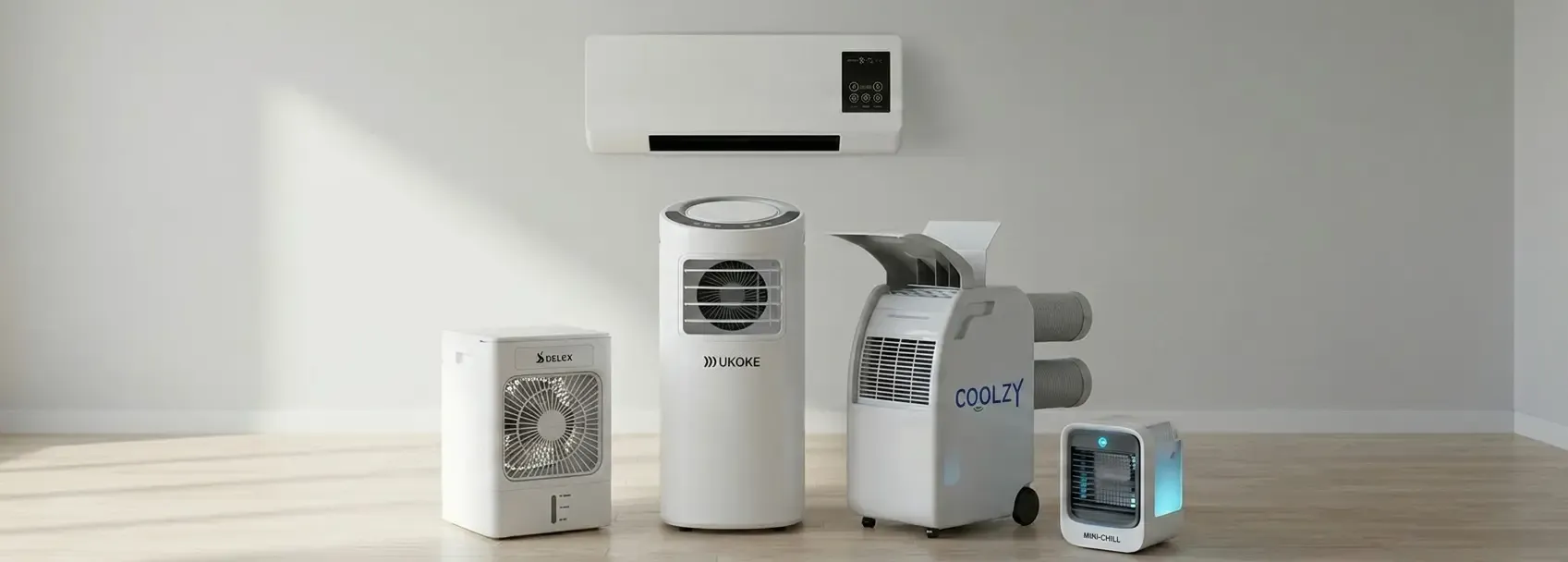
The five portable air coolers compared in this guide
The five units compared — ranked below

Gavin reviews practical home tech — the kind that solves an everyday problem without a contractor, a permit or a surprise on the power bill. Over the past several years he has worked through dozens of portable cooling devices, from desk fans to full portable AC systems.

See the #1 pick →

Summers keep getting hotter, and central air is not an option for a lot of people — renters, apartment dwellers, anyone in an older building with no ductwork. That gap has turned portable cooling into one of the fastest-growing categories in home appliances, and the market is now crowded with units that all claim to be the best.

The problem is that "portable cooler" covers three very different products at three very different price points, and plenty of them do far less than the packaging suggests. So we started with the questions readers actually email us about.

Quick answers first

Five questions we get constantly. Short answers here, full detail further down.

What's the difference between a fan, an air cooler and a portable AC?

A fan moves air. It does not lower the temperature at all — it just makes your skin feel cooler as sweat evaporates.

An evaporative air cooler pulls air across a wet filter. It genuinely drops the air temperature coming out of the unit, works best in dry climates, and adds humidity to the room.

A portable AC uses a refrigerant compressor, like a window unit. It removes heat and moisture, works in any climate, and costs more to buy and to run. Most units you see advertised online sit somewhere between the last two.

Which one actually cools a room, not just your face?

Anything without a compressor cools the air stream, not the whole room. In a bedroom or a home office, a well-designed compact unit placed within a few feet of you makes a clear difference. For a large open living room, you want a full portable AC with a window hose — no compact unit will match it, whatever the listing says.

Which models are quiet enough to sleep next to?

Noise scales with fan size and compressor. Compact units on their lowest setting sit around the level of a quiet fan, which most people sleep through. Full-size portable ACs cycle their compressor on and off, and that change in sound is what tends to wake people, not the volume itself.

Will a portable cooler wreck my electricity bill?

A compact evaporative-style unit draws roughly what a floor fan draws, so the cost of running one overnight is negligible. A 13,000 BTU portable AC is a different story — it draws close to what a window unit draws, and if you run it all day it will show up on your statement.

Which one is the best value overall?

That depends on the room. For a bedroom, office or dorm, the compact units win on price, portability and running cost. Our top pick landed there. For a large living area, pay for the BTUs. We flag which is which in every entry below.

How we compared them

We looked at five of the most widely sold portable cooling units in the U.S. market and assessed each on the same six points: cooling output at the vent, perceived noise at sleeping distance, power draw, ease of setup, build quality and price relative to what it delivers.

Two patterns came up repeatedly. First, a lot of budget units are fans with a water tank bolted on — the air coming out is barely cooler than the air going in. Second, several of the better-performing units are impractical for renters: they need a window kit, a hose, or a drainage routine that nobody keeps up with past the first week.

Scores below are our editorial assessment based on manufacturer specifications, published buyer feedback and hands-on use. They are not laboratory measurements and should be read as a comparison between these five units, not as absolute performance figures.

What matters — and what to walk away from

Look for

  • A noticeable temperature drop at the vent, not just airflow
  • A low setting quiet enough to sleep through
  • Power draw in the range of a household fan
  • No window kit, hose or tools to get running
  • Remote or simple top-panel controls
  • A footprint that fits a nightstand or a desk

Walk away from

  • Units that only recirculate warm air
  • Anything that sounds like a shop vac on medium
  • Window modifications or permanent installation
  • Tanks that leak or need daily emptying
  • Big BTU claims on a unit with no exhaust hose
  • Listings with no clear return window

At a glance

The full write-up for each unit follows the table.

#UnitTypeBest forPriceScore
1AerioQ Portable ACCompactBedrooms, offices, dorms$134.959.5
213,000 BTU Tower UnitFull portable ACLarge living rooms$299.008.9
3Mid-Size Evaporative CoolerEvaporativeDry climates, garages$129.998.3
4Personal Desktop CoolerCompactDesks, single person$59.997.9
5Premium Compact CoolerCompactNiche use, if on sale$179.997.2

The top 5, ranked

01 · Best overall Editor's pick
AerioQ Portable AC

AerioQ Portable AC

$134.95 · compact · no installation

Cooling performance
96
Ease of use
95
Low noise level
94
Energy efficiency
95
Value for money
93
9.5/ 10Overall

AerioQ was the unit that behaved most like a real cooler rather than a fan with a marketing budget. Set it up on a nightstand, fill the tank, and the air coming out of the vent is clearly cooler than the room within the first couple of minutes — enough of a difference that testers stopped reaching for a second fan.

The low setting is the reason it took the top spot. It is quiet enough to leave running overnight, which is where most compact units fail: they cool well on high and become unusable at bedtime. AerioQ holds a usable temperature drop on its quietest setting.

It is not a whole-house solution. This is a personal-space unit — bedroom, office, dorm room, RV. In a large open-plan living room it will take the edge off near you and not much more. Judged for what it is, nothing else in this roundup matched it.

Pros

  • Clear temperature drop at the vent
  • Quiet enough to sleep next to
  • No hose, window kit or tools
  • Draws about what a fan draws
  • Light enough to carry room to room
  • Remote and simple top controls
  • Best all-round balance of the five

Cons

  • Personal-space cooling, not whole-room
  • Tank needs refilling on long runs
  • Sold online only
  • Regularly out of stock in peak summer
Check price & availability →

Opens the official store · Check current stock, shipping and return terms there
02 · Best for large rooms
13,000 BTU tower portable AC

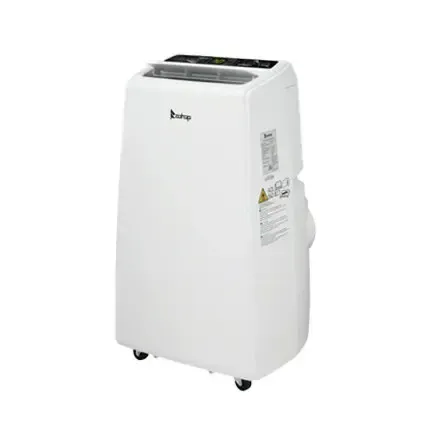
13,000 BTU Tower Unit

$299.00 · full portable AC · window kit required

Cooling performance
94
Ease of use
78
Low noise level
71
Energy efficiency
66
Value for money
74
8.9/ 10Overall

If you need to cool an actual living room and you have a window you can commit, this is the honest answer. A real compressor moves real heat, and nothing compact in this roundup competes on raw output.

The trade-offs are the usual ones. It weighs enough that "portable" means "rolls between two rooms on the same floor," the exhaust hose has to go somewhere, and the compressor cycling is audible. Renters with strict window rules should skip it.

Pros

  • Genuine whole-room cooling
  • Dehumidifies while it runs
  • Thermostat and remote

Cons

  • More than twice the price of our top pick
  • Window kit and hose required
  • Noticeable running cost
  • Heavy to move
03 · Best for dry climates
Mid-size evaporative cooler

Mid-Size Evaporative Cooler

$129.99 · evaporative · no window kit

Cooling performance
84
Ease of use
82
Low noise level
74
Energy efficiency
88
Value for money
79
8.3/ 10Overall

A solid performer in the Southwest and a disappointment on the Gulf Coast — that is the nature of evaporative cooling. Dry air in, cooler and more humid air out. In an already-humid room it mostly adds moisture.

It also runs louder than its size suggests, and the tank is large enough to be awkward to carry to the sink. Good for a garage or a workshop; less convincing as a bedroom unit.

Pros

  • Cheap to run
  • Large tank, long run time
  • Three fan speeds

Cons

  • Only works well in dry climates
  • Raises humidity indoors
  • Bulky to refill
  • Louder than expected
04 · Best budget option
Personal desktop cooler

Personal Desktop Cooler

$59.99 · compact · USB or mains

Cooling performance
73
Ease of use
89
Low noise level
80
Energy efficiency
86
Value for money
76
7.9/ 10Overall

The cheapest way into the category, and it shows. Sitting directly in front of it at a desk, it does the job. Move two feet away and you are back to room temperature.

Small tank, short run time, and it really does need decent airflow around it to work at all. Fine as a desk accessory, not a room solution.

Pros

  • Very portable
  • Includes a filter
  • Lowest entry price

Cons

  • Weak at any distance
  • Short run time per fill
  • Needs a ventilated space
05 · Hard to recommend at full price
Premium compact cooler

Premium Compact Cooler

$179.99 · compact · premium finish

Cooling performance
68
Ease of use
84
Low noise level
79
Energy efficiency
70
Value for money
58
7.2/ 10Overall

Nicely built, well finished, and priced as though it performs like a compressor unit. It does not. At $179.99 it sits above three units that cool better.

The temperature control is genuinely useful and the housing feels a class above the rest of the compact field. That is not enough to justify the gap. Worth a look on a deep discount; otherwise the top pick does more for less.

Pros

  • Best build quality of the compacts
  • Real temperature control
  • Three fan speeds

Cons

  • Priced well above its performance
  • Heavier than the class
  • Struggles with humidity
  • Regular filter maintenance

What buyers report

Common themes from published buyer feedback on our top pick.

Most-repeated positive: the unit is quiet enough to leave running overnight without it interrupting sleep.

Recurring theme · sleep use

Second-most-repeated: buyers moving it between a bedroom and a home office during the day, without any setup each time.

Recurring theme · portability

Most common complaint: expectations of whole-house cooling. It is a personal-space unit and buyers who treat it as one are the satisfied ones.

Recurring theme · expectations

Frequently asked

Do I need a window kit for the top pick?

No. AerioQ is a compact unit with no exhaust hose, so there is nothing to fit to a window. Plug it in, fill the tank, switch it on.

How often does the tank need refilling?

It depends on the setting and the dryness of the room. On a low overnight setting most users get through a full night on one fill; on high it empties faster.

Can it heat as well as cool?

Feature sets change between production runs. Check the current specification on the product page before ordering if year-round use matters to you.

What about returns and shipping?

Return windows, shipping times and warranty terms are set by the seller and can change. Confirm them on the official product page before you order — we link to it directly.

Is AerioQ available in stores?

No. It is sold through the official online store only, which is also why it goes out of stock during heat waves rather than being restocked on a shelf.

Our pick for 2026

Of the five units we compared, AerioQ gave the best balance of cooling, quiet operation and price for bedrooms, offices and small living spaces.

Check price & availability →

Price and stock shown on the official store